View our Main Site »

Friday, December 9, 2011

New Beer Friday - December 9 Edition

Attention Michigan craft beer enthusiasts! Tickets for the 2012 Michigan Winter Beer Festival are now on sale and moving quickly. Siciliano's started with 100 tickets Tuesday night; as of Friday morning we have less than 30 left. Each ticket is $40 and grants admission to a veritable wonderland of beer and roasted turkey legs. Here's our take on last year's Winter Beer Fest, video included.

In other news, congratulations are in order for three area raw cider producers. Sietsema Orchards in Ada recently took top honors at this year's statewide raw cider contest. Second place went to three-time winner Jim Hill of Hill Brothers Orchards, and newly anointed Master Cider Maker Jim Engelsma of Engelsma Cider Mill in Walker completed the Kent County trifecta by coming in a solid third. Nice work, you guys. Thanks for validating our theory that West Michigan produces the best raw (and, therefore, the best hard) cider in the region.

And finally, have you seen this Wisconsin nonsense? Who do they think they are anyway?

New (and Returning) Beer

  • Sam Adams Inifinium, $19.99/750ml - Sam Adams worked "for two years with the world’s oldest brewery, Germany’s Weihenstephan, to create this unique new beer style. A groundbreaking brew, made with only the four traditional ingredients: malted barley, hops, water and yeast, Infinium™ is a crisp champagne-like beer with fine bubbles and a fruity, spicy aroma. The crisp clean malt character and delicate fruit notes in this beer are complemented by a slight citrus flavor from dry hopping with Bavarian Noble hops. Bottle conditioning adds another layer of complexity and light spice notes" (source).
  • Short's & Friends Cornholio, $2.29/12oz - Short's, Three Floyds, and Dogfish Head collaborated on this beer, which is "made with MI horehound (kinda like an minty rootbeery herb), Indiana red popcorn, and Delaware & Cape May Beach Plums" (source). One bottle limit.
  • Short's Captain Fantasy, $2.29/12oz - "Brewed in collaboration with Half Acre, this ale was constructed using a Saison yeast and pears, then twisted with Sorachi Ace hops from Japan" (source). One bottle limit.
  • Short's Liberator, $1.99/12oz - "A double IPA, this beast employs a sizable malt bill, but it’s the ridiculous amounts of hops added to the boil every 4 minutes, for 120 minutes, that showcases this beer. A fruity, floral, piney intensity of hops penetrates through the caramelized malt profile. This well balanced, full bodied brew finishes bitter with a punch of fresh citrus from the addition of lemon and orange zest post fermentation" (source).
  • Breckenridge Christmas Ale, $1.79/12oz - "At over 7% alcohol, with a sturdy texture and rich flavors of caramel and chocolate, our holiday seasonal is the fermented equivalent of a good fire" (source).
  • Heavy Seas Winter Storm, $1.89/12oz - "Our winter ale brewed with copious helpings of English malts and both U.S. and English hops making it a ruddy hued Imperial ESB in style. Full malty flavors dancing with powerful hop aromas and a lingering yet firm hop bitterness. Pairs well with very sharp cheddar, stews, and grilled ribs" (source).
  • Fuller's Vintage Ale 2010, $10.09/16.9oz - "This year’s offering is hopped with fine Fuggles and Goldings as bittering hops with Goldings used for late copper hop addition. Fuller’s 2010 Vintage Ale will have an initial fruit aroma with notes of pear and orange giving through to floral notes, followed by a clean, full, almost liquored initial palate. The finish is dark orange and satisfying" (source).
  • Brewery Ommegang Gift Set, $26.89 - Three bottles of Ommegang beer & one signature Ommegang glass. Beer selection includes:
    • Gnomegang 750ml - "A strong Belgian Golden Ale using Chouffe yeast in the primary fermentation and Ommegang yeast in the secondary" (source).
    • Three Philosophers 750ml - A "powerful marriage of cherries, roasted malts, and dark chocolate" (source).
    • Hennepin Farmhouse Saison 750ml - "Bright and lively in your mouth with a warming mix of spicy gingersnap and citrusy hops" (source).
  • Oliver Winery Beanblossom Hard Cider, $4.99/500ml - Four varieties available: Original, Peach, Strawberry, and Raspberry. "Oliver Winery started in the 1960s as a hobby in the basement of Indiana University law professor William Oliver. His enthusiasm for making wine [and also hard cider, apparently] led him to establish a vineyard northwest of Bloomington. Soon the flourishing vines produced grapes far in excess of his needs as a hobby winemaker, and he began plans to open a commercial winery" (source).
  • Norrebro Skargaards Porter, $12.59/18.3oz - "The beer is top fermented and honey is added before fermentation, the result being a smooth and creamy black porter with gentle chocolate, coffee and nut aromas. The taste is dry, light and elegant with liquorice and dried fruit being the primary flavours. Bitterness is slight and liquorice will linger on the palate" (source).
  • Norrebro North Bridge Extreme Imperial IPA, $15.89/18.3oz - "Inspired by the triple IPAs of California, it is brewed with British malts, adjusted with several other malts for color, and spiced with an extreme amounts of hops. A dark golden, extremely bitter ale with a prominent hop aroma. Northbridge Extreme should be enjoyed as the final beer of the evening – your taste buds can’t be used after drinking this ale!" (source). 
  • Haand Dark Force Double Extreme Imperial Wheat Stout, $10.49/16.9oz - "Dark Force is creamy and velvety, but the addition of plenty of malted wheat gives this stout a crispness and drinkability that belies its considerable alcoholic strength. Be forewarned: this Imperial really strikes back" (source). 
  • Christoffel Double Dark Bok, $7.69/11.2oz - "A dark brown lager with a reddish hue, named the best Bok in Holland. A delicate balance between sweet & bitter, with a firm finish" (source).
  • Mikkeller Monk's Brew Dark Ale, $15.49/750ml - "A dark Belgian ale with a dominant yeast character and deliciously malty body. Well-balanced and distinguished, the beer's characteristic high alcohol content never takes over, and the beer is amazingly smooth and drinkable" (source).
  • Mikkeller Jackie Brown, $15.49/750ml - "This beautiful brown beer’s characteristically roasted malt taste nearly ends like chocolate on the tongue" (source).
  • Mikkeller Czech-style Pils, $6.39/12oz - “The Czech Pilsner is a classic ‘Czech-style’ Pilsner of 4.8% alc. vol. It differs from the more commercial Czech Pilsner by being unfiltered and unpasteurized and heavily dry-hopped with Saaz” (source).
Picture of the Week

First significant snowfall
Millenium Park, Grand Rapids

Cheers!

Thursday, December 8, 2011

Siciliano's Holiday Gift Guide, Homebrew Edition

HJ-1 Magnetism Mixer
By Greg 'Swig' Johnson

Last week we presented people with gift options for the aspiring homebrewer. This week we are giving gift ideas for the established homebrewer. Hopefully one or several of these items will strike the right note. But if you still can't decide what to get the discerning brewer on your list, Siciliano's gift cards are always an excellent option.

  • Blichmann HopRocket - A dual-purpose piece of equipment, the HopRocket can be used as a 'hopback' to infuse great hop aromatics into your hot wort at the last moment before chilling. The HopRocket can also be used as a Randall; patch it into your draft system between the keg and faucet to extract fresh hop flavors as you're pouring beer. Use it also to infuse spices, coffee, or anything else that will fit in it and that you want in your beer. $124.99
  • Blichmann ThruMometer - The ThruMometer is an in-line thermometer constructed from a solid piece of billet aluminum. Use it in conjunction with the Blichmann Therminator or any other plate/counterflow chiller to help determine the correct flow rates of hot wort and cold water in order to achieve optimal chilling performance. $24.99
  • Blichmann Therminator - The Therminator is constructed with 316 stainless-steel fittings and plates that were brazed together in an oxygen-free furnace with pure copper to ensure no leaks. It is also a low restriction design so that it can be used with gravity if you don't have a pump. $199.99
  • Blichmann TopTier Burner - The Cadillac of brewpot burners, the TopTier has a 72,000 BTU/hour output and is optimized for superior power and efficiency. It will provide lightning-fast boils without draining your propane tank. The burner is cast iron but the frame and windscreen are made from heavy duty stainless steel to support the heaviest boils. It can even be converted to run on natural gas and 36" leg extensions are available as well.  $139.99
  • Bayou Classic Banjo Burner - The standard burner that has been used by serious homebrewers for years, the Bayou Classic is more powerful and more efficient than typical turkey fryers, yielding quicker boil times and longer life from a tank of propane. $126.00
  • Siciliano's Stainless Steel Kettle-Valve Kit - We are now building our own kits for people who want stainless steel weldless valve kits on their kettles. The kit includes a 316 stainless ball valve, two 304 stainless washers, a 304 stainless 1/2”x1” nipple, and a high-temp gasket. $28.00
  • Siciliano's Stainless Steel Cooler-Valve Kit - Similar to our kettle-valve kit, the cooler-valve kit is intended to be used with the 10-gal Rubbermaid water coolers. The kit includes a 316 stianless ball valve, three 304 stainless washers, a 304 stainless 1/2”x1.5” nipple, and a high-temp gasket. Food grade (any 300 series) stainless steel is ideal for use in brewing for its durability, ease of cleaning and the inert nature of the metal in contact with most substances. $30.00
  • Stir-Starter Stir Plate - The Stir-Starter is a great economy stir plate that works well for making yeast starters in 1000ml and 2000ml Erlenmeyer Flasks. Made in Michigan, these stir plates will allow a homebrewer to grow healthier yeast for their brews, ultimately yielding a better beer. Magnetic stir bar is included. $52.50
  • HJ-1 Magnetism Mixer - A new addition to our inventory, this magnetic stir plate will perform well with larger flasks, including the 5000ml Erlenmeyer Flask we carry at the Siciliano's. When using the smaller 1000ml flask with this stir-plate, you can use the arm extension to mount a temperature probe in your starter. With a sturdy build and relatively inexpensive price, this stir plate is a great choice for homebrewers who do frequent high-gravity and/or double or triple batches. $70.00
  • Fermentap Inline Thermometer - Kind of like the bigger, more badass brother of the Blichmann Thumometer, this all stainless in-line thermometer includes a Fermentap large dial-face thermometer with a 2” temperature probe mounted to a stainless steel tee. Will accept the 1/2” stainless fittings used on most homebrew systems. Can be attached to the outflow on a plate or counterflow chiller or used with a recirculating mash system to monitor mash and sparge temperatures. A great addition to any advanced brew setup.  $63.00
  • SHURflo 2088 Self-Priming Diaphragm Pump - Finally, a product for both the prolific winemaker and industrious brewer. This diaphragm pump is self-priming to make transferring wine and beer from vessel to vessel easier and less cumbersome than using siphon equipment. Avoid moving heavy carboys with the SHURflo. $186.00
One can also give the gift of knowledge. Here are four books we often recommend to homebrewers and winemakers who want to take their hobby to the next level.

  • Yeast: The Practical Guide to Beer Fermentation, by Chris White & Jamil Zainasheff  - This book can be a world changer for those who are trying to dial in their beers and achieve those certain ethereal qualities that have been eluding them. Yeast is one of the most important contributors to beer flavor and knowing how to handle, manipulate, and please your yeast is an important part of advanced consistent brewing. $19.95
  • Designing Great Beers: The Ultimate Guide to Brewing Classic Beer Styles, by Ray Daniels - This book holds a wealth of information regarding personal recipe construction. Beer recipes are all about balance, and how one balances his ingredients is how he achieves certain desired style characteristics. Ray Daniels provides the framework for a homebrewer to make sense out of the variety of brewing ingredients and determine the proper amount of what to put in their recipe. Anyone who has been brewing for some time, especially all-grain should have this book. $24.95
  • Techniques in Home Winemaking: The Comprehensive Guide to Making Chateau-Style Wines, by Daniel Pambianchi - This book is an essential for any winemaker who is serious about the hobby. If you want to make wine from fresh grapes straight out of a vineyard, then this book is going to help you along the way. Providing thorough information about various pieces of winemaking equipment, yeasts, other facets of winemaking, Pambianchi is more about teaching the paradigm of winemaking than giving people recipes. $21.95
  • The Compleat Meadmaker, by Ken Schramm - For anyone interested in how to make the world's oldest fermented beverage, Schramm's book is pretty much the only and best resource. This book is a comprehensive approach to the process of making the vast varieties of mead. He includes history, techniques, and recipes for making mead. $19.95

Pictured left to right: Blichmann HopRocket (back), Blichmann ThruMometer (front), Blichmann Therminator, Siciliano's Stainless Steel Kettle Valve Kit, Siciliano's Stainless Steel Cooler Valve Kit, HJ-1 Magnetism Mizer (back), Fermentap Inline Thermometer (front), SHURflo 2088 Self-Priming Diaphragm Pump

Happy Holidays!

Wednesday, December 7, 2011

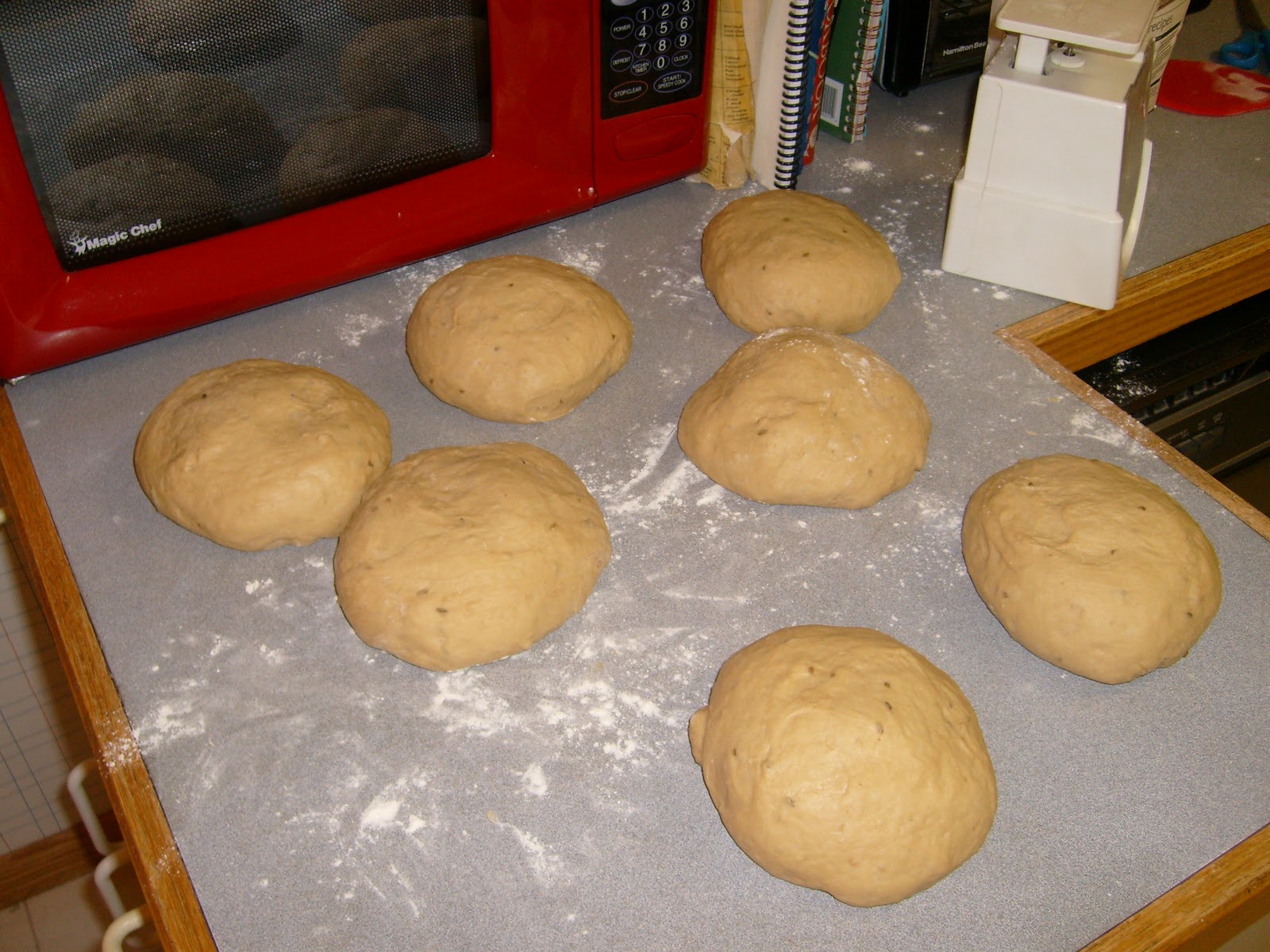
Jeff Carlson's mother's Swedish rye bread (Limpa)

If you have a traditional or family recipe you think others might enjoy, don't hesitate, submit it to The Buzz editors today!

By Jeff Carlson

I grew up in a family surrounded by Swedish relatives and friends. My mom and dad would drag me, my brothers and sister to countless smorgasbords, either in homes or at the local Vasa Lodge. The air was full of great smells and heavy Swedish accents and most of the time I didn’t understand what was being said. One thing I did understand was that I liked bread, in particular, Swedish rye bread or Limpa. Most Limpa recipes contain molasses, fennel, anise, or caraway seeds, and (or maybe not) orange peel. Some recipes will actually call for stout as this bread was originally made from fermented brewer’s wort, the reason why it's also known as Vörtlimpa (“Wort loaf”).

My mother’s recipe is handed down from her mother. It contains fennel and anise, molasses, and a few other ingredients that aren’t too common, mashed potatoes and oats, for example. Also, if you can’t find lard or want a more heart-healthy version, use vegetable shortening or oil as a substitute. This recipe makes a very heavy and sticky dough. I’ve never tried to make it a smaller batch because it goes like crazy around my house. It always seems like I use more white flour then the recipe calls for. Maybe my liquid measuring skills aren't so good.

The finished bread is dense and moist and has a very intoxicating aroma of licorice. At our smorgasbord table, I really like this with a good sharp cheese -- Ost as we Sweds call it -- along with some thin-sliced summer sausage or salami. But to die for is topping it off with a good pickled herring (Inlagd Sill) imported from the mother country, not that Dutch stuff you get around here*. Cream cheese and Gravlax isn’t too shabby as a topping either. So, even if you’re not Swedish, give this bread a try, I think you really will enjoy it.

*The author's opinion of Dutch pickled herring does not necessarily reflect the opinion of The Buzz staff or its parent company, Siciliano's Market. Readers should know that Siciliano's privileges no nationality of pickled fish over any other.

Ingredients & Directions

    • 2 cups water
    • 1 big can evaporated milk
    • 1 cup white sugar*
    • 1 cup brown sugar
    • 1 Tbsp. salt*
    • ½ cup + 1 Tbsp. lard
    • 2 pkg. dry yeast*
    • ½ cup warm water
    • ¼ cup molasses*
    • ½ cup cooked oatmeal
    • 1 cup mashed potatoes
    • 2 tsp. anise seed
    • 2 tsp. fennel seed
    • 4 cups rye flour*
    • 6-8 cups white flour (more as needed)*
Dissolve sugar, salt, and lard in almost boiling water. Add molasses, oatmeal,
potatoes and seeds (course grind). Then add evaporated milk, mixture should be about
lukewarm. Dissolve yeast in ½ cup warm water, add to mixture. Stir in rye flour,
then add white flour. Use hands if necessary, as dough will be stiff and sticky. Knead
thoroughly, 6-8 minutes, let rise in bowl about 2 hours (or until roughly doubled.) Divide
dough into 5 or 6 loaves and let rise again in bread pans. Bake at 350 degrees F for about
50 to 55 minutes.

*Indicates ingredients for sale at Siciliano's Market.

Photos of the Process


Tack och god jul.
(Thank you and happy Christmas.)

Tuesday, December 6, 2011

Making wine from fresh grapes

The author, crushing
The 2011 "fresh grape" season may be over, but it's not too early to start planning for 2012. 

By Weston Eaton, with photos by Christina McDonald

People often ask me what I’ve been brewing. Lately I tell them wine. Whereas making beer entails extensive sanitation and rigorous methodology, wine, it seems, almost makes itself. Clearly grapes want to be wine; why else would their skins be covered in yeast, and their guts a fermentable wort? In tribute to the plum-colored carboys in my basement, and the stains on my hands, here’s a short tale of how to make your own wine from fresh grapes.

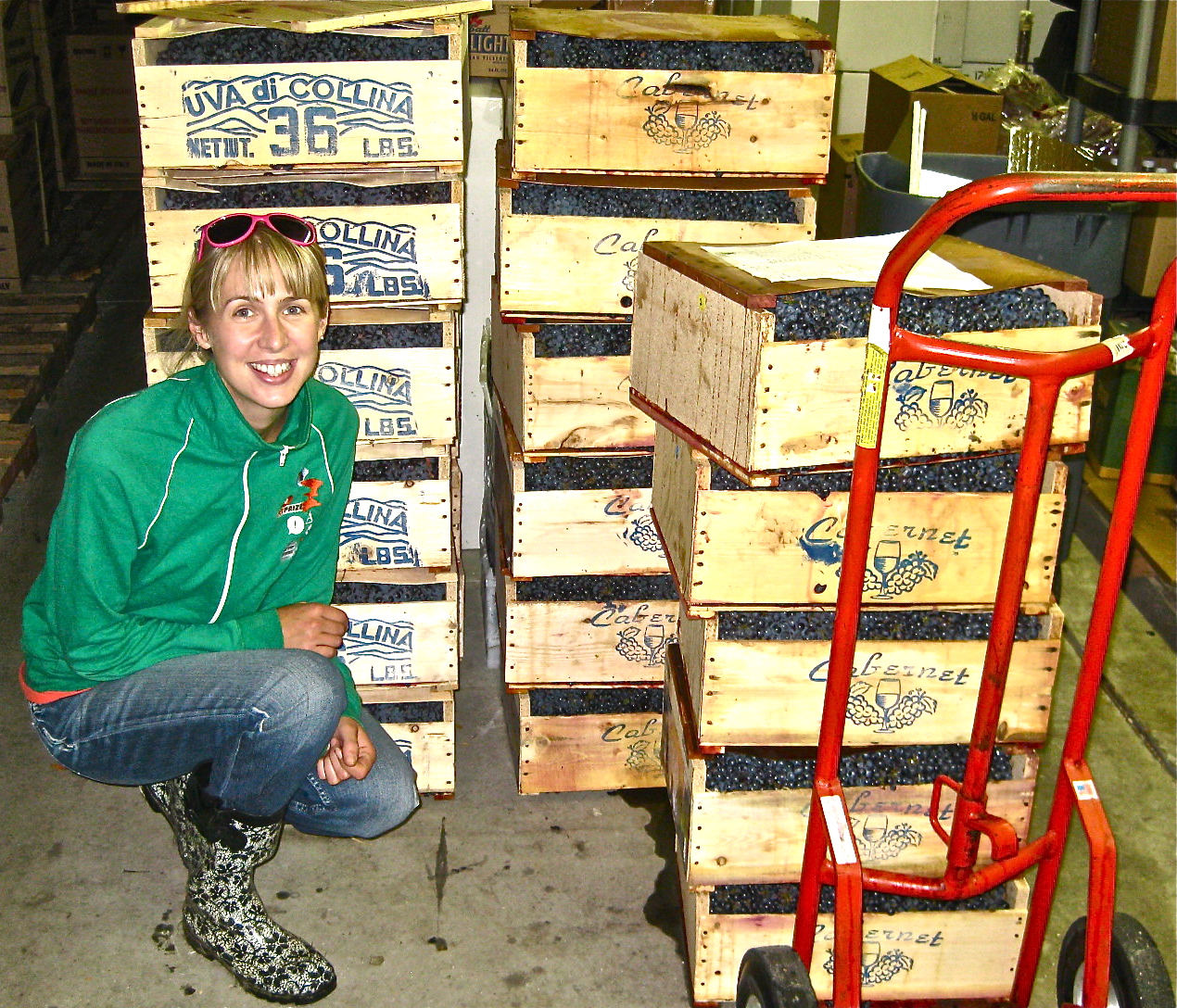
Each fall, just before the first heavy frost, grape farmers and field workers across the northern hemisphere snip their tight, precious bundles of fruit from countless rows of vines. While some go on to make their own wine, many others crate or juice their prized produce for sale to home winemakers. Bryan Taylor and his wife Carol have been doing just that since 1978. I’ve been buying grapes from Taylor Ridge Winery in Allegan for about five years and especially enjoy their reds. Siciliano’s is my other source for fresh grapes. Unlike the grapes from Bryan at Taylor Ridge, these are not locally supplied -- they are shipped in from California. While I’ve been fortunate enough to be let in on this family tradition, this season was the first time Siciliano’s owner Steve offered grape orders to the public*.

I always feel lucky when I get the call from Steve or Bryan that my grapes are in. One has to act fast. If the day is warm, the bees and fruit flies will not be far behind, nor will the mold and spoiling. Threat of spoilage, etc, has inspired me to use the grape harvest as an excuse to postpose other responsibilities, to gather my pails and buckets, and to set about crushing and de-stemming.

Bryan Taylor from Taylor Ridge

While making wine from fresh grapes is an ancient tradition, relatively few people today get to experience the process. One reason for this is simply disjuncture in knowledge. Unless your grandfather, great aunt or pa made wine, you likely have not had the opportunity to watch crushed grapes ferment into plum-colored wine or, likewise, barrels of fresh cider transform into Applejack. However, like the growing interest in more localized and civic-minded food systems, more and more people are interested in home production as a means to complete their understanding of beer and wine. My theory is that home food and drink production -- activities like fermenting pickles, sauerkraut, wine and beer, or even gardening, planting a small orchard, bread making, canning, or herb drying -- can help re-enchant our modern, technologically obfuscated lives.

But even with traditional experiences, or a bit of reading or discussing, one also needs equipment and grapes to make fresh wine. These I feel are the biggest hurdles to getting into winemaking, although both are indeed obtainable. To understand these requirements, I’ll start by going over the process of actually making wine in simple terms. My purpose here is not to develop a guide book or “recipe” -- both are widely available -- rather, for those of you who may be interested in getting started, I’d like simply to make the process more transparent, and less overwhelming. So what follows is less a “how to” and more a “what is this all about?”

Steve from Siciliano's

The first step is acquiring grapes. If you live in Michigan, the two aforementioned sources are fantastic. Yet despite what supermarkets would have us believe, wine grapes are only available once a year. So if you’d like to make wine at home, your best bet is to locate a supplier during the summer months. You’ll need a significant amount of grapes (15-18 pounds) for each gallon of wine you’d like to make. Each gallon of juice will ultimately yield approximately five 750ml bottles of wine. To be clear, though, you need winemaking grapes, not eating grapes!

Once your grapes are ready, you’ll want to crush and de-stem your reds and ferment these on the skins, or crush, de-stem, and then immediately press your whites. This is where the a motorized crusher/de-stemmer and wine press come in handy. On Saturdays each fall Siciliano's lets customers use their equipment free of charge. Bryan too offers this service, and is happy to crush your grapes on site.

The Press

For reds, the wine will ferment on the crushed skins for a week before you press. Skins contain the famous tannins, full of the health benefits clinicians love advocating and the structure your palate loves experiencing. Whites, however, bypass this stage, making for a lighter, more delicate wine. It's at this time that grapes first make their turn towards wine. Wild yeast naturally coats the skin of your grapes. When crushed, and when conditions are right (i.e., when it's warm) these yeasts begin fermenting the sugary juice. Wild yeasts have their own, unpredictable agency. I know of two groups of folks who rely on this more uncontrolled process: those I call “old timers,” who have little interest in “modern” practices, and more “experimental” professional winemakers, whose interest is in creating more “rustic” and “farmy” wines.

To control wild yeast -- to sanitize the ‘must’ -- winemakers use small amounts of sulfite. Sulfite gets a bad wrap. You’ll often hear people say it gives them headaches. I am of a different opinion. Drinking too little water and too much wine gives headaches, not sulfite. When you first crush or press (whites) your grapes, sulfite is added in small amounts, just enough parts per million to eradicate wild yeasts and prevent potential spoilage, but not enough to notice. For me, sulfite is the key difference between wine and beer. Whereas beer requires meticulous sanitation, sulfited wine is far more resilient. I would never imagine putting my hands in beer, much less sampling with the same spoon directly from the fermenter the first week of fermentation, but these profanities are nothing unusual for the winemaker. A day after adding sulfite, when its potency has diminished, more ingredients are added, including yeast nutrient (yeast food), pectic enzyme (helps break down fruit solids), sugar (if you are using lower gravity Michigan grapes) and, finally, winemaking yeast.

The photographer with grapes, pre-crush

When fermentation begins you’ll notice two things. First, for reds, the carbon dioxide produced during fermentation drives the wine skins to the top of the fermenter, forming a "cap." Several times a day then you’ll need to "punch the cap" back down into the wine. Second, all this activity creates heat, and fermentation temperature is important. Often my wines will begin their lives in the cool, fall atmosphere of my garage.

After a week or so of punching the cap, or having your friends/family do it for you, scoop the skins into a wine press and then transfer your must into glass fermenters (carboys), being careful to keep the wine topped up to prevent contact with air. For the next few weeks your aim is to allow sediment to settle out of your wine, and to rack (transfer using a siphon) your wine off this settlement as often as necessary. Natural additives such as Bentonite can help clear your wine and reduce the number of rackings. Finally, your wine comes to rest in a clean carboy, possibly on some oak shavings, for a period of conditioning. I usually cellar my wine "in bulk" until the next wine season, and bottle last year’s vintage when this year’s crop is called in. If you enjoy wine, then try your hand at a batch and lay something down for the long road ahead.

*For the 2011 harvest, Siciliano's did not sell grapes, but only acted to facilitate connections between an independent grape broker and interested winemakers from our area. The arrangement for 2012 remains to be seen.

Monday, December 5, 2011

Industrial-strength malt mill, coming soon to Siciliano's

Image courtesy of the manufacturer
We're upgrading again, this time in the milling department.

By Steve Siciliano

A few weeks ago a customer emailed me to say he was experiencing a decline in his all-grain brewing efficiency; he suggested we double-check the gap settings on our Monster mills. I thanked him for his feedback and assured him that we constantly adjust the gaps between the rollers on our two motorized mills. I also advised him to visually inspect the crushed grain the next time he's in and to notify a Siciliano’s employee if the grind appears to be too coarse.

The truth is those grinders are not performing up to our expectations. While The Monster Mill is an excellent product, capable of meeting and exceeding the average homebrewer's needs, it is not intended for use in commercial settings. On some days our two mills are running almost constantly, and I'm pretty sure that in an average week we are grinding as much grain as some nano-breweries. After mulling over this problem for a few days I decided the only solution is to replace the current mills with a machine designed to handle the grinding needs of a small brewery.

Last week I placed an order for an Apollo Econo 2-Row Mill. This motorized, self-contained unit is being used in a number of small breweries. It is "outfitted with a 1-1/2hp 110/220 TEFC single phase motor" and "6-inch wide rolls that are 8 inches in diameter." The new mill should be in-store and available for use before the new year.

Friday, December 2, 2011

New Beer Friday - December 2 Edition

It's early December, folks, and that means you only have so many days left to complete your holiday shopping. This year, instead of fighting through traffic and fighting off the unruly pepper-spraying masses, why not forget the mall and head straight to Siciliano's.

It makes sense really. Think how Grandma would love a fancy new stir plate and Erlenmyer flask for her yeast starters. Imagine the joy on Cousin Joe's face when he unwraps a six-pack of mixed Belgian triples. And what kid wouldn't want a jar of (alcohol-free) maraschino cherries*?

In all seriousness, we have a ton of good gifts for the beer enthusiasts on your list. For example, this one. Even if you can't forgo the mall completely, be sure to stop by and see us on your way home. A cold beer never tastes better than after a long day of Christmas shopping.

*Sorry kids. Maraschino cherries are currently out of stock. How about a big bag of chocolate covered espresso beans instead? My how your parents would love that.

New (and Returning) Beers

  • Brooklyn Sorachi Ace, $13.79/750ml - "A classic saison, a crackingly dry, hoppy unfiltered golden farmhouse ale, but made entirely with now-rare Sorachi Ace hops grown on a single farm in Oregon" (source).   
  • Brooklyn Black Ops, $22.69/750ml - Extremely limited. So limited, in fact, it "does not exist. However, if it did exist, it would be a robust stout concocted by the Brooklyn brewing team under cover of secrecy and hidden from everyone else at the brewery. Supposedly 'Black Ops' was aged for four months in bourbon barrels, bottled flat, and re-fermented with Champagne yeast, creating big chocolate and coffee flavors with a rich underpinning of vanilla-like oak notes. They say there are only 1,000 cases. We have no idea what they're talking about" (source).
  • Thirsty Dog 12 Dogs of Christmas, $2.19/12oz - "Spiced for the holidays with honey, cinnamon, ginger, nutmeg and Santa's secret recipe" (source).
  • Lake Front Local Acre Lager, $4.89/22oz - "Local Acre is the first beer since prohibition that has been made with 100% ingredients that have been grown and processed in the state of Wisconsin. A distinctly wonderful home-grown flavor comes from the hops and barley being grown in the state’s beautiful summer climate and sandy loam soil that makes this brew a one of a kind Wisconsin original" (source).
  • Lake Front Bridge Burner Special Reserve Ale, $4.89/22oz - "The Bridge Burner pours a deep, fiery amber with a rocky off-white head. The assertive aroma is dominated by dry, earthy American hops: citrus, floral and pine tree notes all make a showing" (source).
  • Lake Front India Black Ale, 4.89/22oz - "This dark, coffee-colored beer pours a rocky, light tan head that leaves plenty of lacing on your glass. The hoppy pine and floral aromas ready your palate for an immediate bitterness. Instead, the sweet, caramely crystal malts blitz through, followed immediately by a sharp piney flavor from the Zeus and Cascade hops. The smooth body leaves a long-lasting hoppy finish" (source).
  • Saugatuck Brewing Co. Neapolitan Milk Stout2.59/12oz - "Neapolitan Stout is a unique blend of milk sugar, chocolate, vanilla beans, and strawberries" (source).
  • Southern Tier Old Man Winter Ale, $1.69/12oz - "OMW throws a deep and inviting hue with a thickness that clings to the glass and the warmth of an open flame. Because of its high alcohol content [7.7%], Old Man is a heady brew that encourages sipping and pondering its essential richness. Drink it fresh now, or cellar a few bottles to see how this old man becomes wiser with age" (source).
  • Samichlaus Helles 2007, $19.39/750ml - From the label, "Samichlaus is brewed only once a year on December 6 and is aged 10 months before bottling. It may be aged in the bottle for many years to come, as older vintages become more complex. Brilliant deep amber, complex dry toasted malt nose and huge intensely sweet palate."
  • Blue Point Brewing Company, Long Island, New York - New to the Grand Rapids market, this brewery was established in 1998. Read their story here. Buy their beer at Siciliano's.
    • Toasted Lager, $1.69/12oz, $3.59/22oz - "Copper in color, our most popular and unique brew is made from six different malts, including English Pale, Crystal, Munich, Carapils, Wheat, and Belgian Caravienna. Toasted Lager’s balanced flavor of malt and hops makes for easy drinking and the special lager yeast we use produces an exceptional, long-lasting smooth finish" (source).
    • Blueberry Ale, $1.69/12oz - "Our fresh Blueberry Ale offers an unusual twist on brewing that turns out to be a wonderful blend of fresh blueberries matched with a distinctive, thirst quenching ale. We carefully add 732 pounds of fresh, plump and juicy, handpicked, USA Northern Highbush Blueberries to every batch. Even before your first sip of Blueberry Ale, a strong, refreshing sweet fruit aroma emanates from the bottle, kicking your taste-buds into overdrive" (source).
    • Hoptical Illusion, $1.89/22oz - "Our classic, American-style India Pale Ale (IPA) features a rare hop grown exclusively on a small farm in Oregon. One taste and you’ll understand why we bought the entire crop. Our Hoptical Illusion IPA is brewed with a generous amount of this select hop that’s added five different ways for maximum hop flavor. The delicious, resiny, citrus-burst that you taste is the “Essence of the Hop” which is balanced by a malty backbone yielding an intense, golden ale" (source).
    • Rastafarye Ale, $4.69/22oz - "A hearty rye malt, blended with fresh West Coast hops resulting in a delicious, deep copper ale with just the right amount of rye flavor to offset the spicy, floral characteristics of the hops" (source).
    • Pale Ale, $3.59/22oz - "Top-fermented and hopped at four different stages throughout the brewing process, this ale has a light-golden color that explodes with a rich, full-flavor. English pale malt lends complexity while small amounts of wheat and Carapils round out the malt bill. Brewed to satisfy hop lovers, it has an immediate floral-citrus flavor that pervades the overall character of this quenching microbrew" (source).
  • Short's Chocolate Wheat, $1.69/12oz - "A Porter where chocolate malt, wheat malt and well chosen specialty grains combine to create a deep black, full bodied beer that provides subtle hop flavors and rich malt tones. This beer balances delicious flavors of roasted caramel, coffee, and chocolate that finish smooth with a pleasant lingering presence" (source).
  • Short's Good Humans, $1.99/12oz - "As a dry hopped double brown ale, Good Humans is unique in part due to the ample dry hopping that takes place after fermentation, giving the beer a floral fragrant hoppy aroma uncommon to most big sweet malty beers. As you take your first sip, sweet malty aromas harmonize with toasted caramel and toffee flavors. The caramel sweetness is mingled with the slightly fruit-like flavors and aromas of hops. The finish is dry and satisfying, making this a beer that pairs well with food. Crackers and cheese, especially topped with a sweet or spicy jam, really bring out the flavors in Good Humans" (source).
  • Short's Cup of Joe Coffee Creme Stout, $2.19/12oz - "A brew uniquely different from most coffee stouts, we cram Higher Grounds roasted fair trade espresso beans into every facet of the brewing process. Prominent aromatics of malt, espresso, and cocoa are abundant and create a flavor robust with big malt characters fused with cream and coffee. The perfect morning night capper" (source).
  • Fort Collins Brewing Company, Fort Collins, Colorado - Another newcomer to the Grand Rapids market. See what they're all about by clicking here.
    • Red Banshee, $1.79/12oz - A "tempting combination of crystal and wheat malts for an impeccable soft caramel flavor" (source).
    • Chocolate Stout, $1.79/12oz - "Subtle hop bitterness rounds out the character of roasted barley and chocolate malt" (source).
    • Z Lager, $1.79/12oz - An amber lager "crafted to be smoky and palatable. Slight caramel undertones and a bright amber color compliment the lingering smoke flavors" (source).
    • Rocky Mountain IPA, $1.79/12oz - Made by "dry-hopping for an intense floral aroma" (source).
    • Kidd Lager, $1.79/12oz - "Chocolate malt lends Kidd its color while German Tettnang hops create the minimal bitterness of the this brew" (source).
    • Major Tom's Pomegranate Wheat, $1.79/12oz - "Brewed with real pomegranates and filtered to bright finish" (source).
  • Weihenstephaner Vitus, $3.39/500ml - From By the Pint beer blog: "Vitus is Weihenstephan's winter seasonal. It's like a traditional Bock only in the sense that it's a bigger beer with a bit more alcohol that will keep you warm through the cold winter months. Where the Vitus differs from other Bocks is that that it's based off of Weihenstephan's delicious Hefe-Weissbier. Rather than starting with a malty dark lager base like Bocks and Doppelbocks, the Vitus starts with a sweet and sour Weiss base."
  • Petrus Aged Pale Ale, $4.79/11.2oz - As reviewed on Beer Advocate: "This is my go to affordable sour beer. It is simple, yet soul satisfying. When I am in the mood for a sour, this always does the trick. The mouthfeel pushes this beer into fantastic treat territory. Also, I love that this beer is over 7% ABV! It drinks like a much lighter sour" (source).
  • Brewery Rinkuškiai, Lithuania - Yet another newcomer to the Grand Rapids market, established in 1991 in the BirĹľai region, known as Beer Country in Lithuania. This according to their website.
    • Werewolf Beer, $2.89/16.9oz - "Simple amber that is crystal-clear and bright" (source).
    • Lobster Lover's Porter, $2.89/16.9oz - "Pours with a tall lingering froth. Beautiful caramel, copper color. Wispy beige head. Complex smell. Aromas of sweet malts, spicy hops, wet hay, plum, brown sugar. Taste is complex too. Flavor of rich sweet malts, caramel. Lots of toffee" (source).
    • Missing Elf Double Bock, $2.89/16.9oz - "Brilliantly crystal clear. It's a golden honey color with little bubbles floating up. A light creamy head forms at first, then fades to small clumps of bubbles around" (source).
    • Before-After Premium Lager, $2.89/16.9oz - "Golden yellow color. Decent white head. Light lacing" (source).
  • Nektar Beer, $1.79/12oz - "For its balanced bitterness, rich foam, and refreshment, Nektar beer has soon become favorite beer to many of beer connoisseurs" (source).
  • Saku Originaal, $2.49/16.9oz - "Saku Originaal gets its special taste from a unique crystal filtration technology, which ensures that every beer is a bottle of pure freshness. It also means that it can be enjoyed lightly and is of the utmost quality" (source).
  • Saku Tume, $1.89/16.9oz - "For the preparation of Saku Tume, in addition to pilsner malt, Munich and caramel malt, as well as burnt sugar is used. This gives the beer its special dark colour, unique sweet taste and a rich fragrance bouquet" (source).
  • Rock, $1.89/16.9oz - "Rock has character. Rock has power. Compared to other lager beers, Rock packs a stronger taste of hops, more punch and not a drop of mildness. A beer for true beer lovers who are not willing to make compromises" (source).
  • Lomza, $2.29/16.9oz - "Lomza Wyborowe has a yellowish-gold coloring with wet grain aromas along with floral hop notes. A smooth, effervescent entry leads to a light-to medium-bodied palate with dry, somewhat light pale malt flavors and alcohol coming through on the finish, along with light, spicy hop flavors" (source).
  • Kalnapilis Original, $2.49/16.9oz - "In creating Kalnapilis Original, our brewers selected the finest Saaz hops. The beer has an especially rich and harmonious flavour while its foam is sturdy and long-lasting. Feel the unique flavour and aroma that seems like it is straight out of the keg."(source).
  • Kalnapilis 7.30, $2.49/16.9oz - "Our strongest beer, Kalnapilis 7.30 has an especially strong aroma. The distinct flavour marvellously matches the higher volume of alcohol."(source).
  • Kalnapilis Grand, $2.49/16.9oz - "We produce Kalnapilis Grand step by step, patiently and thoroughly, from clear water, select hops, and the highest quality barley. By slowly aging the beer, we get a grand, mature flavour" (source).
Picture of the Week

The corner of Wealthy & Henry Avenue, Grand Rapids

Thursday, December 1, 2011

A short course in port

Port, the perfect way to mark any special occasion, the perfect way to make any occasion special.

By Steve Siciliano

A bottle of Dow’s 1997 Vintage Port has been aging in our home wine cellar for about twelve years now. Every so often I’ll pick that bottle up and think about opening it but I always place it back on the rack. I know the wine is ready to drink now and if I was to succumb to temptation we would be entranced by its dark purple color, the aromas of licorice, chocolate and roasted coffee, and by flavors of maple syrup, blackberry and plum. But I also know that it has the potential to age gracefully for at least twelve more years and a wine like that is best enjoyed when marking a special occasion. Maybe I’ll open it when my son Chris and his fiancĂ©e Gena get married, or when Barb and I celebrate our twenty-fifth wedding anniversary, or when the Lions win the Super Bowl.

While there are many fine port style wines made throughout the world, the wines that can legally be called Porto are produced only in Portugal. The grapes are grown in the upper Duoro Valley in the north where the blazing hot summer temperatures allow them to attain high levels of sugar. Winemakers add neutral grape spirits at a certain point during the fermentation. This stops the yeast from working and results in a sweet, fortified wine. Which part of the Duoro the grapes are from and the quality of the harvest determine the style of port that’s produced—a ruby, an aged tawny, a late bottle vintage or, like that bottle aging in our cellar, a vintage porto. Vintage ports are wines of extraordinary depth and complexity that are produced only in exceptional years.

Ruby ports are the least complex and the least expensive. They are blends of young wines that are aged in oak for two to three years and are made from grapes that come from the less prestigious vineyards. While a good ruby port is a simple, straightforward wine that will not benefit from extended aging, it will entice you with it fresh berry aromas and nice red fruit flavors. Siciliano's recommends: Taylor Fladgate Fine Ruby Porto, $16.89.

Aged tawny ports are blends of wine from several, non-vintage years that are aged in barrels until they develop nutty, brown sugar and vanilla flavors and a soft, silky texture. The extended barrel aging transforms the wine from bright ruby red to the light brown, tawny color from which it gets its name. An aged tawny will usually have a ten, twenty, thirty or forty year designation on the label. This does not necessarily mean that the wine has been barrel-aged for the specified time but rather is an indication of the target age profile. In other words a forty-year-old tawny tastes like it is made from wines that are forty years old. Siciliano's recommends: Graham's 20 Year Tawny, $58.39 or Taylor Fladgate 10 Year Tawny, $32.89.

Late bottle vintage ports (LBVs) are unblended wines from a single vintage that was a good but not great year. They are aged in oak barrels four to six years and then filtered and bottled. Thanks to the barrel-aging the wine matures more quickly, giving it to some extent the nuances of a vintage port. But LBVs lack the depth and complexity of vintage port and because they are filtered they will not benefit from extended aging in the bottle. Siciliano's recommends: Smith Woodhouse 1984 Late Bottled Vintage, $40.99.

On average, about three times a decade the Duoro will experience perfect growing conditions resulting in young wines that are almost perfectly balanced. Samples of these wines are sent to the Port Wine Institute and, if approval is given, the year is declared a “Vintage.” Vintage ports are only made from grapes grown in the best vineyards. They are aged in oak barrels for two years and are then bottled unfiltered. As the wine matures the flavors and aromas become deeper, more refined and more complex. Siciliano's recommends: Warre's 1994 Vintage Porto, $117.99.

Vintage ports are extraordinary wines that should be saved for those most special of occasions (providing you have the will power). It doesn’t look like the Lions will win the big one anytime soon, and since our twenty-fifth wedding anniversary is a still silver speck on the horizon, I guess the date Barb and I crack the '97 Dows depends on Chris and Gena.